Sheep vs Goats: Which Should You Raise? (2025 Comparison)
Deciding between sheep and goats? We compare care requirements, costs, temperament, and profitability to help you choose the right livestock for your farm.
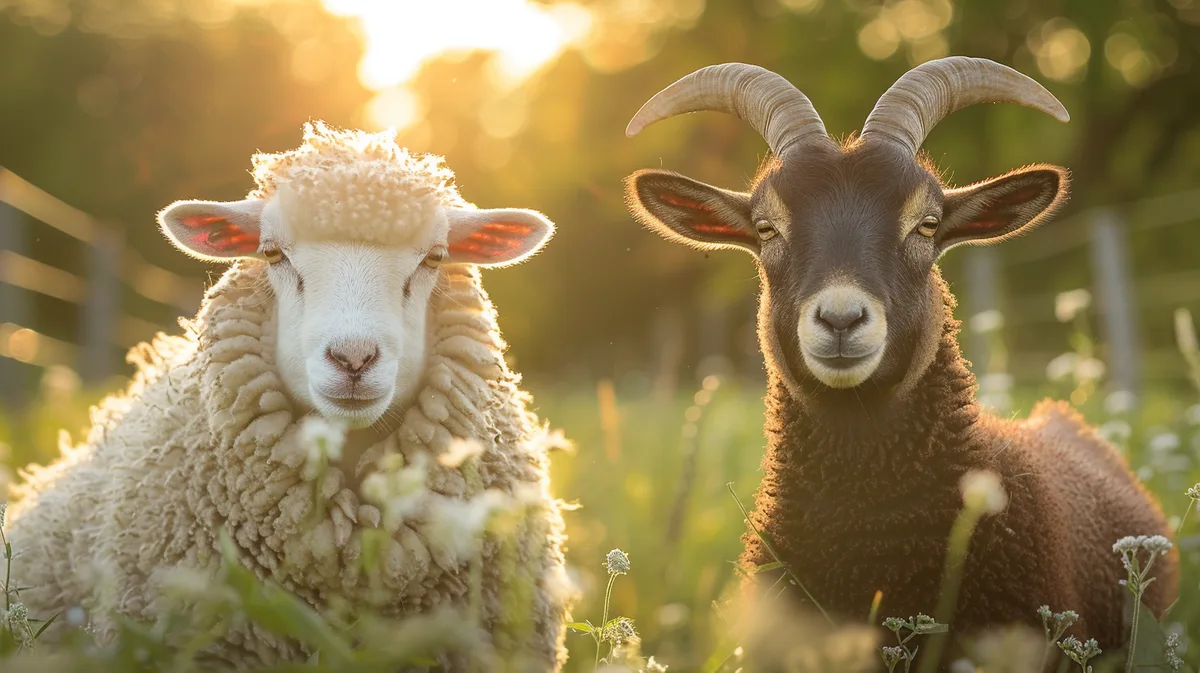
Sheep vs Goats: Which Should You Raise?
One of the most common questions new farmers ask is whether they should raise sheep or goats. Both animals have their merits, and the right choice depends on your goals, land, and lifestyle. This comprehensive guide compares every aspect to help you decide.
Quick Comparison Table
| Factor | Sheep | Goats |
|---|---|---|
| Temperament | Calm, flock-oriented | Curious, independent |
| Fencing needs | Moderate | High (escape artists) |
| Grazing style | Grass grazers | Brush/weed browsers |
| Shelter needs | Minimal | Moderate |
| Primary products | Wool, meat, milk | Milk, meat, fiber |
| Social needs | Strong flock instinct | Herd animals but independent |
| Lifespan | 10-12 years | 12-15 years |
Temperament and Behavior
Sheep Behavior
Sheep are calm, quiet animals with a strong flocking instinct. They prefer to stay together and follow a leader, making them easier to manage as a group. Key traits include:
- Flock mentality: Sheep feel stressed when isolated
- Quiet nature: Less vocal than goats
- Predictable: They tend to follow routines
- Cautious: More wary of new situations
Goat Behavior
Goats are intelligent, curious, and independent thinkers. They’re known for their problem-solving abilities and mischievous personalities:
- Curious explorers: They investigate everything
- Escape artists: Notorious for finding weak spots in fencing
- Vocal: Can be quite loud, especially dairy breeds
- Playful: More interactive with humans
- Hierarchical: Establish clear pecking orders
Verdict: If you want calm, predictable animals, choose sheep. If you enjoy interactive, entertaining livestock, goats may be more your style.
Land and Fencing Requirements
Sheep Land Needs
- Pasture: 2-4 sheep per acre on good pasture
- Grazing style: Prefer short grass, graze close to the ground
- Fencing: Standard 4-foot woven wire works well
- Terrain: Do well on flat to rolling pastures
Goat Land Needs
- Pasture: 4-8 goats per acre (they eat less grass)
- Grazing style: Browsers—prefer brush, weeds, and leaves
- Fencing: Require 5-foot fencing minimum; electric recommended
- Terrain: Excel on rough, brushy, or hilly land
Verdict: Have brushy land to clear? Get goats. Have grassy pastures? Sheep are your answer.
Shelter and Housing
Sheep Shelter
Sheep are remarkably hardy and need minimal shelter:
- Three-sided shelter sufficient in most climates
- Good ventilation critical (prevents respiratory issues)
- 15-20 square feet per sheep
- Wool provides natural insulation
Goat Shelter
Goats are less tolerant of wet and cold:
- Need dry shelter; hate getting wet
- Require more protection from elements
- 15-20 square feet per goat
- Draft-free but well-ventilated
Verdict: Sheep are lower maintenance for shelter; goats need more protection from weather.
Feed and Nutrition
Feeding Sheep
- Primary diet: Pasture grass and hay
- Require less diverse diet
- Prone to obesity if overfed grain
- Critical: Need sheep-specific minerals (copper is toxic to sheep!)
Feeding Goats
- Primary diet: Browse (brush, leaves, bark) plus hay
- Need more variety in diet
- Higher metabolism requires more feed
- Can tolerate copper; need it in their diet
Verdict: Sheep are simpler to feed; goats need more dietary variety but can eat things sheep cannot.
Health Considerations
Common Sheep Health Issues
- Internal parasites (significant concern)
- Foot rot (especially in wet climates)
- Wool-related issues (shearing needed for wool breeds)
- Flystrike in warm climates
Common Goat Health Issues
- Internal parasites (also a major concern)
- Hoof issues
- Pneumonia (especially when wet/cold)
- More prone to mineral deficiencies
Verdict: Both require similar parasite management. Sheep with wool need shearing; goats need better weather protection.
Profitability and Products
Sheep Products
- Meat: Lamb commands premium prices
- Wool: Additional income stream (breed dependent)
- Milk: Sheep milk is valuable but less common
- Market: Strong demand for lamb, especially ethnic markets
Goat Products
- Milk: Goat dairy is growing rapidly
- Meat: Goat meat (chevon) demand is increasing
- Fiber: Angora and cashmere goats produce valuable fiber
- Market: Strong ethnic market; growing domestic demand
Verdict: Both can be profitable. Dairy is easier with goats; wool adds income with sheep. Market demand varies by region.
Cost Comparison
Startup Costs
| Item | Sheep | Goats |
|---|---|---|
| Animals (5-10 head) | $750-2,500 | $1,000-3,000 |
| Fencing (1 acre) | $1,500-2,500 | $2,000-3,500 |
| Shelter | $500-1,500 | $1,000-2,000 |
| Equipment | $500-1,000 | $500-1,000 |
Annual Costs Per Animal
- Sheep: $150-250 (feed, healthcare, shearing)
- Goats: $200-350 (higher feed costs, no shearing)
Verdict: Sheep typically have lower startup and ongoing costs.
Best Breeds for Beginners
Beginner-Friendly Sheep
- Katahdin: Hair sheep, no shearing needed
- Dorper: Hardy meat breed
- Shetland: Small, dual-purpose, good temperament
Beginner-Friendly Goats
- Nigerian Dwarf: Small, friendly, good milk
- Kiko: Hardy meat breed, low maintenance
- LaMancha: Calm dairy breed
Who Should Choose Sheep?
Sheep are ideal if you:
- Have grassy pastures
- Want lower-maintenance animals
- Prefer calm, quiet livestock
- Are interested in wool production
- Don’t want to deal with escape artists
- Have a good lamb market nearby
Who Should Choose Goats?
Goats are ideal if you:
- Have brushy or weedy land to clear
- Want interactive, personable animals
- Are interested in dairy production
- Have experience with livestock
- Can invest in proper fencing
- Enjoy animals with personality
Can You Raise Both?
Yes! Many farmers successfully raise sheep and goats together. Considerations:
- Keep separate mineral feeders (copper toxicity for sheep)
- Goats often become flock leaders
- Different parasite treatments may be needed
- Both benefit from companion animals
Making Your Decision
- Assess your land: Grassy vs. brushy terrain often decides the question
- Consider your goals: Meat, milk, wool, or land clearing?
- Evaluate your personality: Do you want calm or entertaining animals?
- Check local markets: What sells well in your area?
- Visit farms: Meet both species before deciding
Conclusion
There’s no wrong answer—both sheep and goats make excellent small farm livestock. Sheep offer simplicity and calm demeanor, while goats bring personality and versatility. Many farmers start with one species and later add the other.
Ready to find breeders? Browse our sheep directory or find goat breeders in your area.
Still undecided? Contact local breeders in your area to visit their farms and meet both species in person.
Enjoyed this article?
Subscribe to get more farming tips and guides delivered to your inbox.
Related Articles

Complete Beginner's Guide to Raising Sheep
Everything you need to know to start your sheep farming journey, from choosing breeds to basic care and management.
Read More
Goat Farming for Beginners: Everything You Need to Know
A comprehensive introduction to goat farming covering breeds, housing, feeding, and health management for new farmers.
Read More